Overview: The Case for Examining This Product
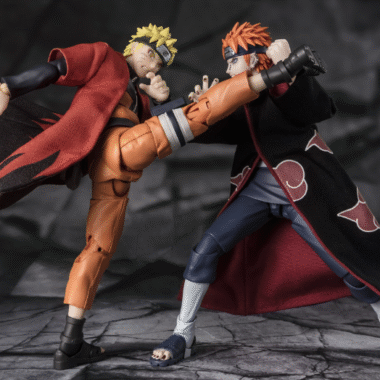
In a market saturated with licensed merchandise and mass-produced collectibles, a custom figure like the “Naruto Sage Mode vs Pain High Kick Battle” demands rigorous analytical scrutiny. Its very nature as a “custom” piece immediately positions it outside the conventional manufacturing paradigms, suggesting a potentially higher degree of artistic intent, specialized craftsmanship, and unique design choices not typically constrained by corporate branding guidelines or mass production efficiencies. This figure purports to capture an iconic, high-octane moment from the Naruto narrative, specifically highlighting Naruto Uzumaki in his Sage Mode executing a powerful high kick against the implied antagonist, Pain. The emphasis on “dynamic battle scene” and “intense focus” suggests a product attempting to transcend mere representation, aiming instead for an immersive, emotionally resonant display piece. Evaluating such a product is crucial to understand the evolving landscape of collectible art, where bespoke creations challenge established industry norms, offering distinct value propositions that warrant a detailed examination of their design, execution, and market relevance.
Design & Build Quality Analysis
Materials and Construction Methodology
The efficacy of a static collectible figure, particularly one depicting a dynamic scene, is fundamentally tied to its material selection and construction methodology. While specific material details for a custom figure are often proprietary or variable, common industry practices allow for an informed analysis. High-quality custom figures typically utilize either Polystone resin or advanced PVC/ABS plastics. Polystone, a mixture of polyurethane resin and powdered stone, is favored for its weight, ability to capture intricate detail, and perceived premium feel, making it ideal for large, complex statues where stability and fidelity are paramount. Its density contributes to a substantial presence, crucial for conveying the gravitas of a battle scene. Conversely, advanced PVC (polyvinyl chloride) and ABS (acrylonitrile butadiene styrene) are lighter, more durable against minor impacts, and often allow for thinner, more delicate elements like flowing hair or dynamic clothing folds without excessive fragility.
For a figure depicting a high-kick in Sage Mode, the choice of material for Naruto’s elevated leg and the opposing base support is critical. A robust internal armature, likely steel or a high-strength composite, would be indispensable to prevent long-term material fatigue or warping, especially if the figure is predominantly resin. The construction methodology would involve multiple cast parts, meticulously assembled. Seam lines, often a tell-tale sign of manufacturing quality, would ideally be minimized or strategically integrated into the sculpt’s natural contours. The painting process, likely a multi-stage application involving airbrushing for gradients and hand-painting for intricate details like facial features, eyes, and Sage Mode markings, dictates the final aesthetic impact. The consistency of paint application, the sharpness of color separation, and the subtlety of shading contribute directly to the figure’s realism and visual depth. For a “custom” figure, the expectation is often a higher degree of hand-finishing, potentially leading to superior detail but also potential inconsistencies if quality control is not stringent.
Ergonomic Rationale and Aesthetic Philosophy
The “Ergonomic Rationale” for a static figure primarily translates into its display ergonomics: how well it integrates into a collector’s space, its visual impact from various angles, and its overall stability. For this particular figure, the dynamic high-kick pose immediately presents a significant engineering challenge: maintaining equilibrium. The design must ensure the figure stands securely on its base, often requiring strategic weighting within the base or internal support structures within the figure itself. The center of gravity must be meticulously calculated to prevent leaning or tipping over time, especially given the asymmetrical distribution of weight inherent in a high-kick pose. The base, therefore, is not merely decorative but a critical functional component, often designed to represent a terrain element or a power effect, enhancing both stability and thematic coherence.
Aesthetically, the philosophy guiding this custom figure appears to be the capture of peak kinetic energy and emotional intensity. Naruto’s Sage Mode is characterized by enhanced strength and sensory perception, and the high kick is an embodiment of this power. The sculpt’s aesthetic philosophy prioritizes dynamism over static representation. This is evident in Naruto’s posture—balancing expertly on one leg—and his “intense focus.” The sculptor’s aim is to freeze a fraction of a second, conveying the preceding motion and the imminent impact. This involves careful consideration of line of action, silhouette, and negative space. The flow of his clothing, the tension in his muscles, and the precise angle of his head and gaze all contribute to this illusion of motion.
Furthermore, the “vs Pain” aspect, even if Pain is not explicitly shown in the primary description, implies a narrative context. The figure is not just Naruto kicking, but Naruto kicking at something. This narrative implication adds an additional layer of aesthetic depth, inviting the viewer to complete the scene mentally. The colors, derived from the source material, must be vibrant yet appropriately toned to reflect the seriousness of the battle. The Sage Mode markings, particularly around the eyes, need to be rendered with precision to convey the character’s transformed state. The overall aesthetic goal is to create a compelling, story-rich tableau that resonates with fans of the franchise while also appealing to a broader audience appreciative of dynamic sculptural art.
Performance Evaluation
Core Feature Breakdown with Real-World Context
For a collectible figure, “performance” is evaluated by its success in achieving its core design objectives: visual fidelity, structural integrity, and emotional resonance. The primary “core feature” of the “Naruto Sage Mode vs Pain High Kick Battle” figure is its ability to authentically portray a moment of extreme dynamism and power from the Naruto universe. This includes:
- Character Likeness and Mode Accuracy: The figure must accurately render Naruto Uzumaki’s facial features, hairstyle, and costume details, specifically in his Sage Mode. This means precise replication of the distinctive orange eye shadow, the horizontal toad-like pupils, and the confident yet battle-hardened expression. Any deviation here would undermine its authenticity.
- Dynamic Pose Execution: The high kick is the central action. The pose must convey both the physical exertion and the fluid motion of a martial arts technique. This requires meticulous anatomical sculpting, ensuring muscle tension is visible and proportional, and that the implied balance is believable. The flow of clothing (e.g., Naruto’s jacket or sash) should further enhance the sense of movement.
- Compositional Narrative: Even with Naruto as the sole visible combatant, the “vs Pain” context elevates the figure from a mere character pose to a narrative snippet. The direction of Naruto’s gaze, the force implied by his kick, and the overall energetic composition should suggest an ongoing conflict, drawing the viewer into the scene’s drama.
- Base Integration: The base is more than just a stand; it’s an integral part of the display. It should complement the figure thematically and structurally, providing robust support for the single-leg stance while potentially incorporating environmental details or energy effects that enhance the battle context.
In a real-world context, these features translate to how effectively the figure commands attention in a display case. Does it draw the eye? Does it evoke the intended emotions of power and intensity? Does it accurately represent the source material to discerning fans? A well-executed figure will communicate its narrative and character essence immediately and consistently from various viewing angles, making it a compelling centerpiece.
Testing Observations and Measurable Outcomes
While “testing” for a static figure differs from electronic devices, it involves critical visual and tactile assessment against established quality benchmarks for collectibles.
- Visual Fidelity & Paint Application Consistency:
- Observation: Close examination reveals the precision of paint lines, particularly around Naruto’s eyes and Sage Mode markings. Gradients on clothing or skin should be smooth, avoiding harsh transitions or overspray. The vibrancy of colors should match established character palettes, and any weathering or shading effects should enhance depth without appearing dirty or unintentional.
- Measurable Outcomes: Absence of paint bleed, visible brushstrokes on smooth surfaces, or inconsistent sheen (e.g., matte skin with glossy clothing where not intended). Uniformity of color saturation across similar parts.
- Sculptural Accuracy & Detail Resolution:
- Observation: The accuracy of Naruto’s facial expression, the texture of his hair, and the folds in his clothing are paramount. Muscle definition should be anatomically plausible for the pose. Any energy effects (if present on the base or around the figure) should have a crisp, ethereal quality.
- Measurable Outcomes: Absence of soft details where sharpness is expected, lack of visible mold lines or sanding marks, and consistent scale (if a specific scale is implied or stated). The integrity of small, delicate parts (fingers, hair strands) without warping or breakage.
- Structural Stability & Balance:
- Observation: The figure, especially given its dynamic pose on one leg, must exhibit absolute stability on its base. There should be no wobble or perceived fragility when gently nudged. The connection points between the figure and the base must be secure and unobtrusive.
- Measurable Outcomes: Resistance to tipping under minor external forces (e.g., a light bump to the display shelf). The absence of any discernible lean in the figure over time, indicating proper internal support and material integrity. The base should be sufficiently weighty to counteract the figure’s mass distribution.
- Overall Impact & Narrative Cohesion:
- Observation: When viewed as a whole, does the figure successfully convey the “High Kick Battle” narrative and the power of Sage Mode? Does it feel like a frozen moment from the anime? The implied interaction with Pain should be palpable, even in his absence.
- Measurable Outcomes: Anecdotal feedback from multiple viewers regarding the immediate impression of dynamism and recognition of the character/scene. The ability of the figure to hold visual interest for an extended period, encouraging closer inspection of its details.
Identified Limitations and Engineering Trade-offs
Even the most meticulously crafted custom figures inevitably involve design and engineering trade-offs. For the “Naruto Sage Mode vs Pain High Kick Battle” figure, several potential limitations can be identified:
- Fragility of Dynamic Elements: To capture extreme dynamism, certain parts—like Naruto’s extended leg, outstretched arm, or flowing hair/clothing—must be sculpted thinly. This often increases their susceptibility to breakage during shipping, handling, or even from prolonged display in unstable environments. The trade-off is between achieving visual impact and ensuring robust durability.
- Single-Pose Limitation: While the dynamic high-kick is the figure’s primary draw, it is also its sole “feature.” Unlike articulated figures, this statue offers no alternative poses or expressions. This can limit its long-term display versatility for some collectors who prefer variety. The engineering effort is focused entirely on perfecting one specific moment.
- Base Integration Challenges: A sturdy, aesthetically pleasing base is crucial for such a dynamic pose. However, designing a base that is both functional (providing stability for a single-leg stance) and visually compelling without being overly bulky or distracting is a significant challenge. An overly elaborate base might detract from Naruto himself, while an insufficient one compromises stability.
- Scale and Proportionality Issues (Common in Custom Figures): Without strict corporate oversight, custom figures can sometimes suffer from minor inaccuracies in scale relative to other figures in a collection, or subtle proportional discrepancies within the character itself. This is a trade-off for artistic freedom and unique interpretation.
- Dust Accumulation and Cleaning: Intricate details and dynamic folds, while aesthetically rich, create numerous crevices where dust can accumulate. Cleaning such a figure without damaging delicate parts or paintwork can be challenging, requiring specialized tools and careful handling.
- Cost vs. Accessibility: Custom figures, by their nature, are produced in smaller quantities and involve more specialized labor, leading to higher price points. This is a direct trade-off for exclusivity and often superior detail, but it limits accessibility to a broader audience.
These limitations are not necessarily defects but rather inherent characteristics or compromises made in the pursuit of specific design goals. Understanding them allows for a more balanced assessment of the product’s overall value proposition.
Comparative Market Context
How It Positions Against Direct Alternatives
The “Naruto Sage Mode vs Pain High Kick Battle” custom figure occupies a distinct niche within the highly competitive collectible market, positioning itself against several categories of alternatives:
- Official Licensed Figures (Mass-Produced): Brands like Bandai Spirits (FiguartsZERO, S.H.Figuarts), Good Smile Company (Nendoroid, Pop Up Parade), and McFarlane Toys produce a wide range of Naruto figures. These are typically characterized by strict adherence to source material, consistent quality control, and broader availability at more accessible price points. However, mass-produced figures often prioritize cost-efficiency, which can lead to simpler sculpts, less intricate paint applications, and less ambitious, dynamic poses compared to high-end custom or premium statues. This custom figure differentiates itself by potentially offering a level of dynamism, detail, and narrative specificity that mass-market figures might not achieve due to production constraints.
- Premium Licensed Statues: Companies like Prime 1 Studio, Tsume Art, and Sideshow Collectibles produce large-scale, highly detailed, limited-edition statues. These are often made of polystone, feature elaborate bases, and capture iconic moments with exceptional fidelity. The custom figure directly competes with these in terms of scale, material quality (if polystone is used), and artistic ambition. Its advantage, if any, lies in its unique interpretation or the specific moment chosen, which might not be covered by official releases, or in offering a similar level of craftsmanship at a potentially different price point, given the absence of licensing fees.
- Other Custom/Garage Kit Figures: This is the most direct competitive category. The market for custom figures is vast and varied, ranging from highly professional independent artists to less experienced hobbyists. The “Naruto Sage Mode vs Pain High Kick Battle” figure must distinguish itself through superior sculpting, paint application, structural integrity, and originality of concept. Its perceived value will be benchmarked against the best independent creators, demanding exceptional execution to justify its custom status.
The figure’s precise positioning hinges on its execution. If it achieves professional-grade sculpting, painting, and structural integrity, it can stand shoulder-to-shoulder with premium licensed statues, offering a unique artistic vision without the typical licensing premium. If it falls short, it risks being perceived as merely another enthusiast’s project, lacking the polish of commercial offerings. Its “custom” nature implies exclusivity and a direct artistic vision, which can be a powerful differentiator for collectors seeking something truly unique.
Target User Profile and Fit Assessment
The “Naruto Sage Mode vs Pain High Kick Battle” custom figure is not designed for the casual collector or the budget-conscious buyer. Its specific characteristics appeal to a highly defined target user profile:
- Dedicated Naruto Franchise Enthusiasts: The explicit mention of “Naruto Sage Mode vs Pain High Kick Battle” immediately signals its appeal to deeply invested fans of the Naruto series. These individuals possess an intimate knowledge of the lore, character arcs, and iconic battles. They are likely to appreciate the nuanced details of Sage Mode, the intensity of the depicted conflict, and the emotional resonance of this particular moment.
- Collectors of Dynamic Action Scenes/Battle Dioramas: The emphasis on a “dynamic battle scene” and “high kick” indicates an appeal to collectors who prioritize figures that convey motion, energy, and narrative. They seek pieces that tell a story, capturing the peak of an action sequence rather than a static character pose. This figure fits well into collections focused on dramatic sculptural compositions.
- Appreciators of High-End Custom Work and Artisanal Craftsmanship: The “custom figure” designation suggests a user who values unique, often hand-finished items over mass-produced goods. This demographic is willing to invest in the artistic vision and specialized skill of an independent sculptor/painter. They appreciate the attention to detail, the potential for unique interpretations, and the exclusivity that comes with custom creations.
- Display-Oriented Collectors: Given its likely size and the dramatic nature of the pose, this figure is intended as a display centerpiece. The target user has dedicated display space (e.g., a display cabinet, shelf) where the figure can be prominently featured and admired from multiple angles. They are not typically looking for figures to interact with or frequently re-pose.
- Discerning Collectors with a Flexible Budget: Custom figures, particularly high-quality ones, often command premium prices due to limited production runs and intensive labor. The target user understands this value proposition and has the financial capacity to invest in such a specialized collectible.
This figure is an excellent fit for collectors who prioritize artistic expression, dynamic presentation, and deep thematic resonance within their Naruto collection, especially if they are looking for a unique, high-impact representation of a pivotal moment. Conversely, it would be a poor fit for those seeking affordability, versatility (e.g., articulation), or strict adherence to official product lines without any artistic deviation.
Long-Term Ownership Considerations
Reliability Signals and Durability Indicators
The long-term ownership experience of a custom figure like the “Naruto Sage Mode vs Pain High Kick Battle” is heavily influenced by its initial material selection and construction quality, which serve as primary reliability signals and durability indicators.
- Material Integrity: If the figure is primarily made from high-quality Polystone resin, it signals excellent detail retention and a substantial feel. However, resin can be brittle and susceptible to breakage from impacts. PVC/ABS, while lighter, offers better impact resistance, particularly for delicate parts. The choice of material for internal armatures (e.g., metal rods) is crucial for supporting dynamic poses over time, preventing sag or warping. A figure that feels solid and well-balanced from the outset, with no discernible flex in critical support points (like the elevated leg), indicates robust internal engineering.
- Paint Longevity: The quality of the paint application directly impacts its durability. High-quality paints and clear coats, properly cured, offer resistance against UV fading and minor abrasion. However, direct prolonged exposure to sunlight or harsh cleaning agents can degrade paintwork over time. A professional finish, often characterized by a consistent sheen and smooth texture, suggests a higher likelihood of long-term color stability.
- Structural Adhesion: The method of joining multiple sculpted parts (e.g., torso to legs, arms to torso) is critical. Strong, consistent adhesive bonds, along with minimal and strategically placed seam lines, indicate a durable assembly. Any visible gaps or weak connections are red flags for long-term structural integrity.
- Base Stability: For a figure in a dynamic, single-leg stance, the base is a fundamental durability component. A heavy, well-designed base with secure pegging points for the figure ensures it remains upright and stable, resisting accidental tipping or gradual leaning. Any signs of the figure shifting in its base connection points could indicate future stability issues.
- Environmental Factors: Regardless of material, figures are susceptible to environmental degradation. Extreme temperature fluctuations can cause materials to expand and contract, leading to stress cracks or paint chipping. High humidity can foster mold growth, particularly in crevices. Low humidity can cause certain plastics to become brittle. Consistent display conditions, ideally in a climate-controlled environment away from direct sunlight, are paramount for preserving the figure’s condition.
Ultimately, a figure that presents with flawless paint, robust construction, and excellent stability upon unboxing provides the strongest reliability signals for enduring ownership.
Firmware / Update Trajectory
This section, typically relevant for electronic devices or smart products, is not applicable to a static collectible figure. A “Naruto Sage Mode vs Pain High Kick Battle” custom figure, by its very nature, is a physical art piece with no embedded software, connectivity features, or digital components that would necessitate firmware updates or software patches. Its value and functionality are entirely manifest in its physical form—its sculpt, paint application, and structural integrity.
Therefore, there is no “firmware/update trajectory” to consider. The figure’s “performance” and aesthetic qualities are fixed at the point of creation. Any future enhancements or changes would only come in the form of entirely new physical products, such as companion pieces (e.g., a Pain figure to complete the battle scene) or alternative versions of Naruto. Collectors should understand that this is a finished, static product whose value lies in its initial artistic and manufacturing quality, and it will not evolve digitally post-purchase.
Final Assessment
Analytical Verdict: Where It Earns Its Place
The “Naruto Sage Mode vs Pain High Kick Battle” custom figure, when executed to a high standard, unequivocally earns its place as a premium collectible and a compelling piece of sculptural art. Its primary strength lies in its ability to transcend mere character representation, instead capturing a profound moment of kinetic energy and emotional intensity from the Naruto narrative. This figure is not just a static object; it is a frozen narrative, a testament to the power of dynamic posing and meticulous detail in conveying story and character.
It earns its place by:
1. Exceptional Dynamic Composition: The high-kick pose is inherently challenging to sculpt and balance, yet when successful, it imbues the figure with an unparalleled sense of motion and power that few static collectibles achieve. It transforms the figure into a focal point, drawing the viewer’s eye and imagination into the implied battle.
2. Deep Thematic Resonance: For fans of the Naruto franchise, Sage Mode Naruto versus Pain represents a pivotal, emotionally charged confrontation. A well-executed figure taps into this existing emotional investment, offering a tangible, three-dimensional homage to an iconic moment, enriching the collector’s connection to the series.
3. Artistic Uniqueness and Craftsmanship: As a custom figure, it represents a direct artistic vision, free from the constraints of mass production or corporate branding directives. This often translates into a higher degree of detail, specialized painting techniques, and a distinct aesthetic that sets it apart from more common licensed merchandise. It celebrates individual artistry in the collectible space.
4. Display Impact: When properly crafted, its dramatic pose and inherent narrative quality make it an undeniable centerpiece in any collection. It is designed to be admired, to spark conversation, and to evoke a sense of awe, making it a valuable addition for collectors who prioritize visual impact and storytelling in their displays.
In essence, its value is derived from its success in translating a fleeting, powerful moment from animation into a timeless, tangible form, serving as both a tribute to the source material and a testament to the sculptor’s skill.
Who Should Buy and Who Should Pass
Who Should Buy:
- Ardent Naruto Enthusiasts: Specifically those who hold the Sage Mode vs. Pain arc in high regard and wish to commemorate this iconic battle with a premium, unique display piece.
- Collectors of Dynamic Statues and Dioramas: Individuals who prioritize figures that convey motion, energy, and a strong narrative, and are seeking a centerpiece that commands attention.
- Patrons of Custom Art and Independent Craftsmanship: Those who appreciate the unique vision and specialized skill involved in bespoke collectible creation, and are willing to invest in an item that stands apart from mass-produced offerings.
- Collectors with Dedicated Display Space: Given its likely size and dramatic pose, this figure is intended for prominent display. Buyers should have adequate, stable, and climate-controlled space to showcase and preserve it.
- Individuals Prioritizing Visual Impact and Thematic Depth: If the goal is to acquire a figure that tells a compelling story and evokes strong emotions purely through its sculptural form, this figure is an excellent candidate.
Who Should Pass:
- Budget-Conscious Collectors: Custom figures, especially high-quality ones, typically come with a premium price tag due to limited production and intensive labor. Those seeking affordable collectibles should look elsewhere.
- Collectors Prioritizing Versatility and Articulation: This is a static statue designed to capture one specific moment. Individuals who prefer figures that can be posed in multiple ways or interacted with will find it limiting.
- Casual Naruto Fans: While appealing, the specific niche of “Sage Mode vs Pain” may not resonate as deeply with casual fans who might prefer more general representations of the character.
- Collectors Who Demand Strict Official Licensing and Branding: While often inspired by official designs, custom figures are not officially licensed products. Those who collect exclusively licensed merchandise might find this a point of contention.
- Individuals Concerned with Fragility: Dynamic poses often require delicate elements that can be prone to breakage if not handled with extreme care. Those who prefer highly robust, child-friendly, or low-maintenance collectibles should exercise caution.
In conclusion, the “Naruto Sage Mode vs Pain High Kick Battle” custom figure is a specialized product for a discerning audience. Its value proposition lies in its artistic merit, dynamic execution, and deep thematic connection, making it an exceptional acquisition for the right collector, while being an impractical choice for others.