Setting the Stage: The Competitive Landscape
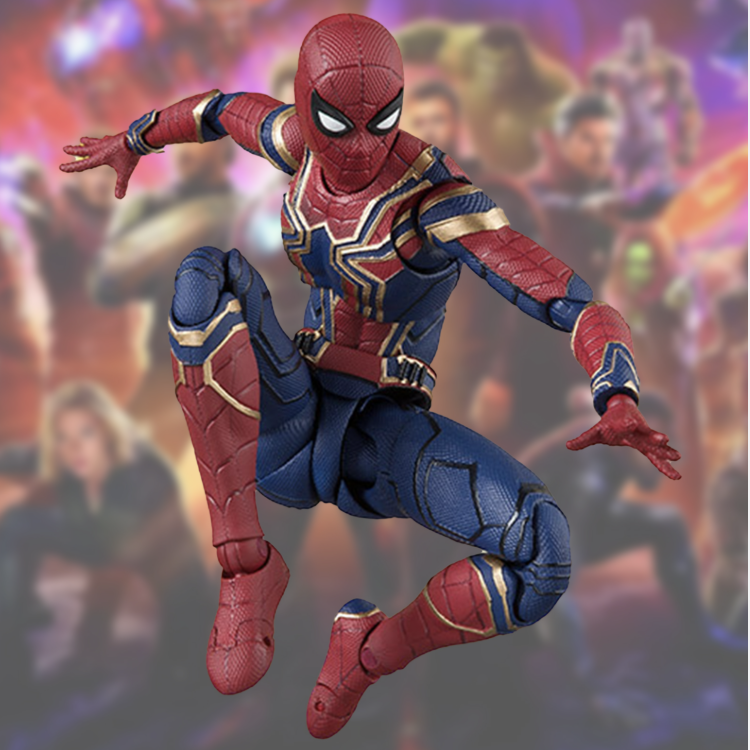
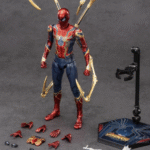
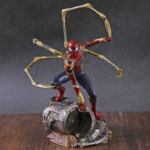
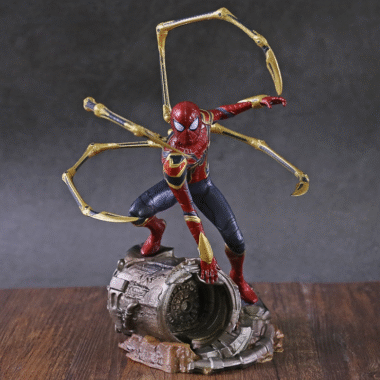
Spiderman Action Figure Custom Collectible Marvel Hero Icon
Unleash your inner hero with a custom Spiderman Action Figure, straight from the Marvel Universe. This legendary web-slinger, known for his agility, wit, and unwavering…
View Product →The market for Spiderman action figures is a vibrant, multifaceted ecosystem, catering to a broad spectrum of collectors ranging from casual enthusiasts to dedicated connoisseurs. This segment is characterized by intense competition, driven by brand loyalty, character popularity, and a continuous pursuit of enhanced realism and articulation. From mass-produced lines found in retail stores to highly specialized, limited-run collectibles, the sheer diversity makes an objective comparison non-trivial. The “Spiderman Action Figure Custom Collectible Marvel Hero Icon” (henceforth referred to as “The Icon”) enters this arena, positioning itself as a premium offering distinguished by its “custom collectible” nature and emphasis on “meticulous craftsmanship” and “high-grade PVC.” To accurately assess its value and standing, it is imperative to benchmark The Icon against established alternatives across different tiers of the market: the accessible mass-market collector figures (e.g., Hasbro Marvel Legends), the high-articulation premium import figures (e.g., MAFEX, S.H. Figuarts), and the ultra-premium boutique figures (e.g., Mezco One:12 Collective). Each tier presents a unique value proposition, making a direct, apples-to-apples comparison challenging without a clear framework.
Defining the Evaluation Criteria
To provide a structured and impartial analysis, this comparison will rely on three primary evaluation criteria: performance benchmarks, build quality and material comparisons, and a price-to-value ratio framework. These criteria are designed to encompass the most critical aspects influencing a collector’s decision, moving beyond subjective aesthetics to quantifiable and observable attributes.
Performance Benchmarks and Methodology
Performance in the context of action figures primarily refers to articulation, poseability, and the range of dynamic expressions achievable. Our methodology will assess the number and type of articulation points, the range of motion each joint permits without hindrance, and the overall stability of the figure in various poses. Key areas of focus include the articulation of the neck, shoulders, elbows, wrists, torso, hips, knees, and ankles. A superior figure will allow for fluid, naturalistic posing that accurately reflects Spiderman’s acrobatic abilities, without visible gaps or structural weaknesses. The inclusion and quality of interchangeable accessories, such as hands, heads, and web effects, will also be considered as these significantly enhance a figure’s expressive range and playability, contributing to its overall “performance” as an interactive collectible.
Build Quality and Material Comparisons
Build quality encompasses the durability, tactile feel, and precision of manufacturing. This criterion scrutinizes the materials used, specifically the grade of PVC or other plastics, the consistency of paint application, and the robustness of joint construction. For The Icon, its stated use of “high-grade PVC” and “meticulous craftsmanship” will be directly examined against the material specifications and observable quality of its competitors. Factors such as seam lines, plastic tolerance, paint consistency, absence of flashing, and the overall structural integrity will be critically evaluated. The expectation for higher-tier figures is a seamless finish, crisp paint lines, and joints that are neither too loose nor too stiff, maintaining their tension over time. The “durability” claim will be assessed by considering the apparent resilience of the plastic and the likelihood of parts breaking under normal handling.
Price-to-Value Ratio Framework
The price-to-value ratio transcends a simple cost comparison by integrating the figure’s monetary cost with the perceived and actual benefits it delivers across the performance and build quality criteria. This framework acknowledges that a higher price can be justified by superior craftsmanship, enhanced articulation, premium materials, and exclusive features. Conversely, a lower price does not inherently signify better value if the figure compromises significantly on quality or poseability. We will analyze how each figure’s price point aligns with its offerings, considering factors such as accessories included, scale, production rarity, and brand prestige. The objective is to determine which figure offers the most compelling package relative to its cost, providing a rational basis for investment for different collector profiles.
Head-to-Head Analysis
Category: Performance — Who Wins and Why
In the realm of pure performance, defined by articulation and poseability, the Premium Import Grade figures (e.g., MAFEX, S.H. Figuarts) typically establish the benchmark. These lines are engineered with an emphasis on hyper-articulation, often incorporating complex joint designs that allow for an unparalleled range of motion, enabling collectors to recreate Spiderman’s most dynamic and acrobatic poses with remarkable accuracy. Their typical 1/12 scale often facilitates tighter tolerances and more discreet joint integration, minimizing visual disruption. The inclusion of a wide array of interchangeable hands, expressive head sculpts, and web-slinging effects further amplifies their expressive capabilities, allowing for nuanced storytelling through posing.
The Mass-Market Collector Grade figures, while offering commendable articulation for their price point, generally fall short of the Premium Import Grade. Joints may have a more limited range, be more visible, or occasionally suffer from inconsistent tension. While they provide a good foundation for various poses, achieving the extreme, gravity-defying stances synonymous with Spiderman can be challenging without external support or careful balancing. Accessories are usually adequate but less extensive or detailed than their premium counterparts.
The Icon, with its “meticulously crafted” nature and “intricate details,” suggests a strong focus on aesthetic quality. If its articulation system matches the engineering prowess of the Premium Import Grade, particularly in the torso, hips, and ankles, it could compete strongly. However, the “custom collectible” designation often implies a higher emphasis on unique sculpts and display presence, which can sometimes come at the expense of maximum articulation if the design prioritizes seamless aesthetics over joint visibility. For The Icon to truly win in this category, its joint system must be both robust and highly flexible, allowing for a broad spectrum of Spiderman’s iconic poses without compromising the figure’s visual integrity. Its success here hinges on whether its custom design intelligently integrates articulation rather than sacrificing it for static beauty.
The High-End Boutique Grade (e.g., Mezco One:12 Collective) figures, while highly articulated, sometimes face unique challenges due to their mixed-media approach, particularly fabric clothing. While the fabric enhances realism, it can occasionally restrict extreme joint movement in ways that all-plastic figures do not. For Spiderman, whose costume is skin-tight, this effect is often minimized, but the fabric can still bunch or stretch in certain poses. Their articulation is excellent, but perhaps not as uninhibited as the best all-plastic Premium Imports.
Therefore, the Premium Import Grade often wins on pure articulation and poseability, providing the most unhindered performance. The Icon has the potential to challenge this if its custom engineering prioritizes and perfects articulation alongside its detailed sculpt.
Category: Build Quality — Engineering Differences Examined
Build quality is where distinct differences in manufacturing philosophy and material investment become most apparent. The Icon’s description emphasizes “high-grade PVC,” “exceptional quality and durability,” and “meticulous craftsmanship.” This suggests a commitment to superior materials and stringent quality control. High-grade PVC, when properly molded and finished, offers excellent detail retention, a pleasant tactile feel, and good resistance to yellowing or degradation over time. The “intricate detail” and “textured web pattern” further imply a high level of fidelity in the sculpt and paint application, with sharp lines and minimal bleed.
The High-End Boutique Grade figures typically set the absolute standard for build quality. Their use of premium materials extends beyond PVC to include fabric tailoring, die-cast components, and sophisticated paint applications that often incorporate weathering or shading effects to a very high degree. Joint tolerances are exceptionally tight, and figures feel substantial and well-constructed in hand, with a distinct sense of luxury. Durability is generally excellent, though fabric elements may require more careful handling to prevent fraying or damage.
Premium Import Grade figures also exhibit very high build quality. Their PVC is typically of a good grade, offering a balance of flexibility and rigidity. Paint applications are generally precise, with clean lines and often subtle shading. Joint construction is robust, designed to withstand frequent posing without loosening prematurely. While they lack the mixed-media elements of boutique figures, their all-plastic construction is usually executed with high precision, resulting in minimal seam lines and a cohesive aesthetic.
Mass-Market Collector Grade figures, by necessity, operate within tighter budget constraints. While their build quality is generally acceptable, it is not uncommon to find minor imperfections such as visible seam lines, slightly softer plastic that can warp, or less precise paint applications (e.g., minor overspray or uneven coverage). Joints, while functional, may exhibit varying degrees of tightness or sometimes be prone to breaking if mishandled, indicating a less robust material choice or manufacturing process compared to premium offerings. The “durability” for these figures is often adequate for display but perhaps less resilient to extensive play or repeated dynamic posing over many years without wear.
In this category, the High-End Boutique Grade often leads due to its multi-material approach and superior finishing. However, The Icon, with its specific claims of “high-grade PVC” and “meticulous craftsmanship,” is positioned to directly compete with or even surpass the Premium Import Grade in terms of pure PVC quality and detail execution. Its custom nature could allow for a level of individual attention to detail and quality control that mass-produced lines cannot match. Assuming these claims hold true, The Icon should demonstrate superior tactile feel, paint precision, and overall structural integrity compared to mass-market options, and potentially rival even the best Premium Imports within its all-PVC construction.
Category: Price and Long-Term Cost of Ownership
The price of an action figure is a primary determinant for many collectors, but a comprehensive analysis requires considering the long-term cost of ownership, which includes potential maintenance, resale value, and the overall satisfaction derived from the investment.
Mass-Market Collector Grade figures are distinguished by their accessibility and relatively low initial purchase price, typically ranging from $20-$30 USD. This makes them ideal for casual collectors or those wishing to build a large roster of characters without significant financial outlay. The long-term cost of ownership is minimal; while their resale value may not appreciate significantly, their widespread availability means replacements are often easy to acquire. The primary “cost” might be the occasional quality inconsistency or the need for minor touch-ups over time.
Premium Import Grade figures occupy a higher price bracket, generally between $70-$120 USD. This increase is justified by their superior articulation, paint applications, and often a more extensive array of accessories. The long-term cost of ownership is still relatively low, as these figures are built to last. Their resale value tends to be stronger than mass-market figures, especially for popular characters or limited editions, making them a more stable investment. Durability is high, minimizing the need for replacement.
The Icon, being a “custom collectible,” is likely to command a price point reflecting its specialized nature, unique design, and the “meticulous craftsmanship” involved. It is reasonable to expect its initial purchase price to be on par with or even exceed Premium Import Grade figures, potentially ranging from $100 to $200+ USD, depending on the scale and complexity of the customization. The long-term cost of ownership would primarily be the initial investment. Its “custom” and “collectible” status could confer significant appreciation in resale value, particularly if produced in genuinely limited quantities or if the customizer gains a strong reputation. However, the market